
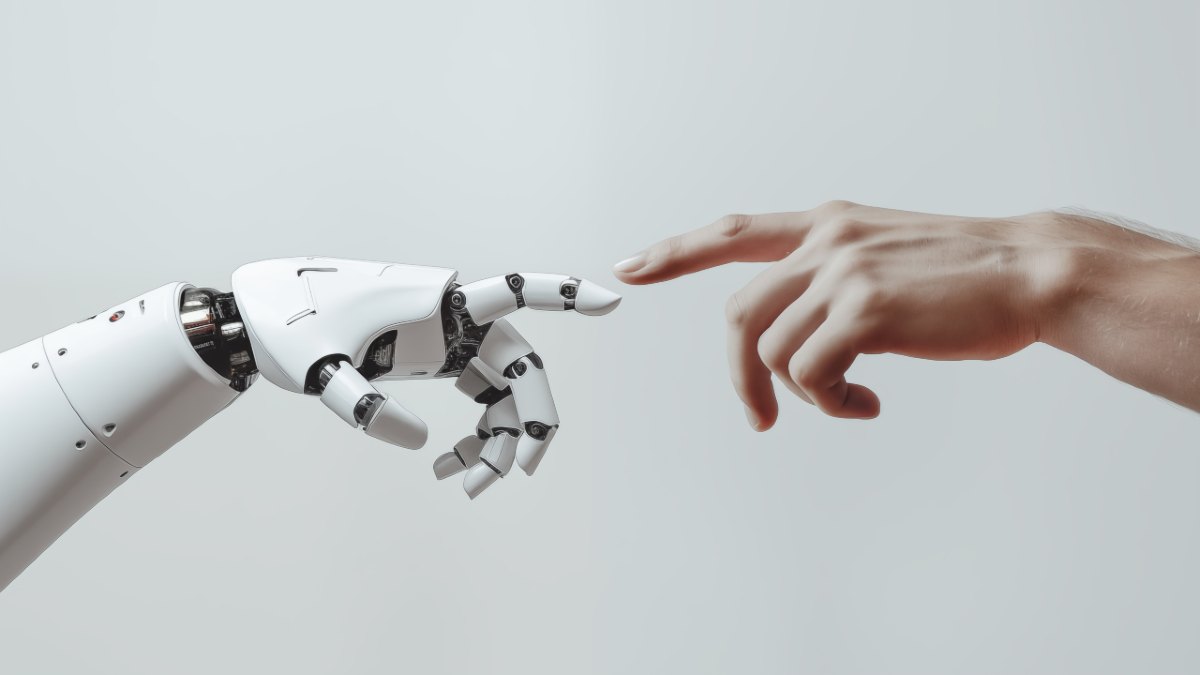
The Human Role in AI: Who Teaches the Machine What Matters?
Beyond Code and Computation
Artificial Intelligence is now woven into the fabric of modern life — in how we communicate, decide, learn, and even imagine the future. Yet for all its sophistication, AI does not know why it does what it does. It does not understand consequence, value, or meaning. It simply follows the trail of data laid before it.
That trail, however, is human. The biases, assumptions, and aspirations of those who design and deploy AI become the invisible architecture of its “thinking.” This is why the real question is not how powerful AI will become, but whose perspective it reflects as it learns and evolves.
The Human Obligation
Humans have always built tools to extend capability — fire, the wheel, the computer. But AI is the first tool that might start shaping us back. Its decisions influence hiring, lending, justice, security, and the stories we consume. When technology begins to define the human experience, we must ask what moral code it follows — and who decides it.
The responsibility cannot sit with algorithms or engineers alone. It requires philosophers, regulators, economists, ethicists, and ordinary citizens to participate in defining what “good” looks like. AI should not only be efficient or profitable — it must be aligned with human progress, fairness, and dignity.
From Risk to Reflection
In the governance world, AI often gets reduced to a new category of risk to be controlled. But this thinking is too narrow. AI doesn’t just create risk — it challenges the very assumptions on which risk frameworks are built.
It forces organisations to reconsider how decisions are made, how accountability is assigned, and how value is defined. A model might be compliant and still be wrong. A process may be explainable and still be unfair. Managing AI therefore requires something deeper than controls — it requires reflection.
Humans in the Loop
Keeping “humans in the loop” isn’t about hovering over a dashboard; it’s about retaining moral agency. Humans provide what algorithms lack — context, empathy, and the capacity to choose restraint over optimisation. We interpret not just data, but meaning.
The future of AI governance will depend on whether we see ourselves as supervisors of machines or as co-authors of an evolving system that learns from our collective wisdom — and, inevitably, our mistakes.
Ample Vista’s Perspective
At Ample Vista, we recognise that technology’s trajectory is set not by the code, but by the conscience behind it. Our work is to help institutions pause and think before they automate — to interrogate what their AI systems are optimising for, whose interests they serve, and whether their decisions honour the human principles they claim to stand for.
We understand that AI’s process — the input, the logic, the output — is only part of the story. What matters most is the outcome over time, the impact on people, and the values embedded in every automated decision.
The genie is indeed out of the bottle — but what happens next depends on how wisely we guide it.